
At Apple Dentistry in Lansing, IL, we help patients restore comfortable function and a natural-looking smile after tooth loss. Missing teeth affect more than your appearance; they can change how you chew, speak, and care for the surrounding teeth. Our team focuses on clear explanations, careful planning, and treatment choices that fit each patient’s oral health needs and long-term goals.
When a tooth is lost, the consequences ripple through the mouth. Adjacent teeth tend to shift toward the empty space, which can alter your bite and create uneven wear on other teeth. That gradual movement may also make certain teeth harder to clean, increasing the risk of decay and gum inflammation over time.
Beyond tooth movement, the opposing tooth may drift or over-erupt into the gap, which further disrupts normal biting relationships and can lead to sensitivity or fracture. In the jawbone beneath the missing tooth, the lack of natural stimulation causes gradual bone remodeling; this resorption can change facial support and the way dentures or restorations fit in the future.
For many patients, these changes are subtle at first and become noticeable only after the problem has progressed. That’s why addressing tooth loss proactively — with solutions that restore function and protect neighboring teeth — is important not only for looks but for long-term oral health.
Contemporary dentistry offers several reliable paths to replace missing teeth, each designed to restore chewing ability, speech, and the balance of forces in the mouth. Options range from removable appliances to fixed restorations that are permanently cemented or secured to implants. The best choice depends on your oral health, the condition of the surrounding teeth, and personal preferences for maintenance and appearance.
Restorative materials and laboratory techniques have improved substantially. Today’s crowns and pontics (the replacement teeth in a bridge) can be crafted from lifelike ceramics and high-strength materials that mimic natural enamel in color and translucency. This makes it possible to achieve results that are both durable and aesthetically pleasing.
Choosing the right restoration is a collaborative process between you and your dentist. We balance clinical considerations like bone volume and gum health with practical factors such as how a restoration will be cared for on a daily basis. The goal is to deliver a solution that looks natural, functions well, and supports oral health for years to come.
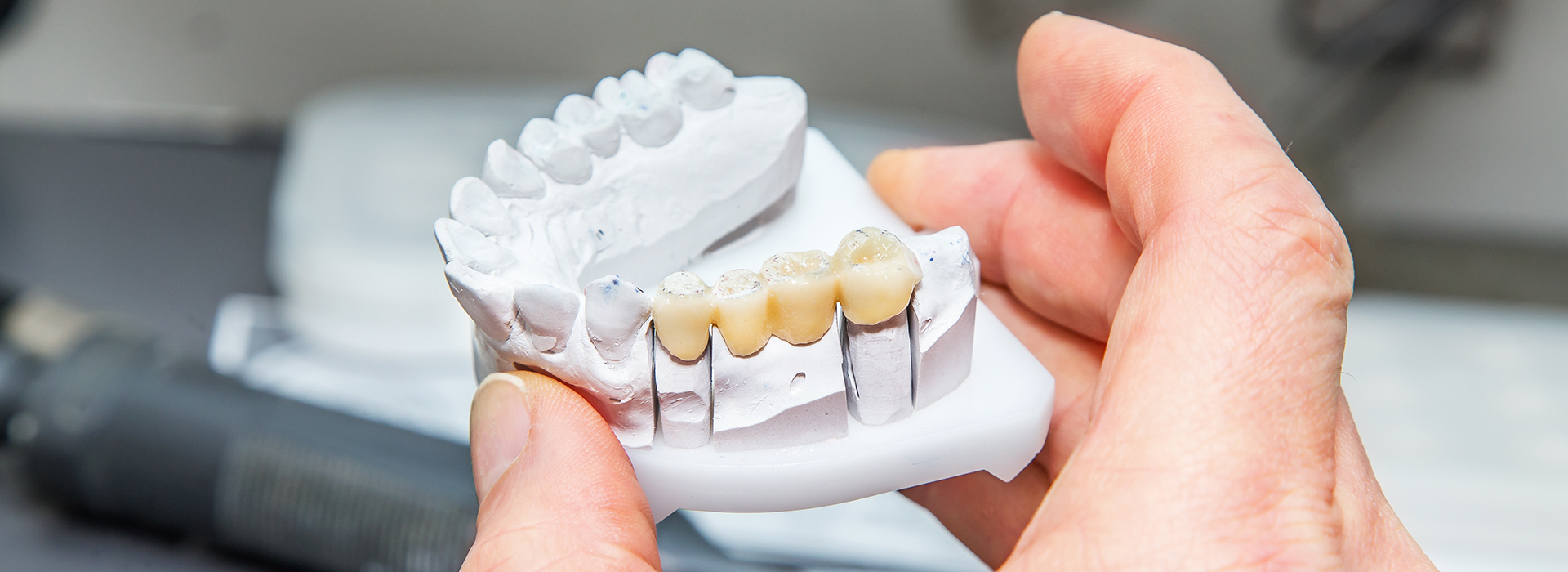
A dental bridge is a fixed prosthetic designed to span a gap left by one or more missing teeth. Traditional bridges anchor to prepared natural teeth on either side of the gap; the artificial teeth (pontics) are fused to crowns that sit over those supporting teeth. By bridging the space, the restoration restores chewing surfaces and prevents surrounding teeth from shifting.
In contrast, implant-supported bridges use dental implants placed into the jawbone as support instead of natural teeth. Because implants act like tooth roots, they provide strong, independent support for replacement teeth and help preserve the underlying bone. Both approaches can produce excellent functional and cosmetic outcomes when planned and executed correctly.
Bridges are often selected when a fixed, non-removable restoration is preferred and when the condition of the support teeth or available bone makes them a suitable option. Proper hygiene and periodic professional care are essential to maintain the health of the supporting teeth, gums, and any implant components over time.
There are several bridge designs, each with specific applications. A traditional fixed bridge uses crowns on both sides of the missing tooth to support the pontic; it is a reliable choice when adjacent teeth are strong and may already need crowns. A cantilever bridge attaches to a crown on only one side and can be useful in areas with limited support, but it places different forces on the abutment tooth.
Maryland (resin-bonded) bridges rely on metal or ceramic wings bonded to the backs of adjacent teeth and are often used for single-tooth replacement in low-stress areas. While less invasive to neighboring teeth, they may not be ideal where biting forces are high. Implant-supported bridges replace missing teeth without altering neighboring natural teeth and are especially valuable when multiple adjacent teeth are missing.
Each type has trade-offs regarding tooth preparation, longevity, maintenance, and how forces are distributed. During a consultation, we evaluate factors such as the health of the abutment teeth, bone volume, bite dynamics, and cosmetic goals to recommend the design that will provide the best long-term outcome.
Successful bridge treatment starts with a comprehensive evaluation. We review your medical and dental history, examine tissues and teeth, and often use imaging to assess bone levels and root positions. If gum disease or decay is present, those conditions must be addressed before fabricating a long-term restoration to ensure a healthy foundation.
For a traditional bridge, the supporting teeth are shaped to receive crowns, impressions are taken, and a temporary restoration protects the prepared teeth while the laboratory crafts the final bridge. You may experience mild sensitivity or gum tenderness after preparation, but these symptoms are typically short-lived. The final appointment involves careful fit checks and adjustments to ensure comfortable function and a natural bite.
When implants are part of the plan, surgical placement is performed with attention to comfort and predictable healing. A period of integration follows, during which the implant bonds with the jawbone; healing times vary. Temporary restorations may be used for appearance and function during this phase. Once integration is complete, the final bridge is affixed either to implant abutments or to crowns on natural teeth, depending on the chosen approach.
After placement, routine home care and regular dental visits are essential. Bridges require thorough cleaning around the abutments and under pontics, and implants need ongoing checks to monitor gum health and implant stability. With proper care, a well-designed bridge can serve you for many years as a stable, esthetic component of a healthy smile.
Restoring missing teeth is a key step in preserving long-term oral health and confidence. If you’d like to learn more about how a dental bridge could fit into your treatment plan, contact our practice to discuss options and next steps. We’re here to answer questions and help you choose the approach that meets your goals.
Your new bridge is customized to the exact specifications of your smile. Before cementing to the underlying teeth or affixing it to the supporting implants, the shade, occlusion, and all aspects of its fit are carefully checked. In addition to being designed to blend seamlessly with your smile, it's also made to suit your bite and withstand all manner of oral function. We take great care to make sure your new restoration looks great, fits well, and that your bite feels comfortable.
Replacing missing teeth with a dental bridge is a worthwhile investment in the look, health, and function of your smile. While many dental insurances offer coverage for a dental bridge, and some toward the cost of implants, the benefits and amounts can vary significantly from plan to plan. At the office of Apple Dentistry, we understand the financial considerations involved in care and do all we can to help patients begin treatment without any additional stress or delay. In addition to doing our best to optimize your dental benefits, we also offer several payment and financing options. Feel free to contact our office if you have any questions on the cost of care, dental insurances, financing plans, or acceptable forms of payment.
Now that your new permanent crown or bridge is in place, it's essential to maintain good oral hygiene. With proper care, your new restorations will last for years to come. Make sure to brush and floss as instructed. We'll show you how to floss under your dental bridge to keep your new smile clean and bright. Remember to make appointments for your routine checkups and professional cleanings.
The standard answer is that with routine dental visits and good home care, a bridge can last ten to fifteen years, and in many cases, much longer.
At the office of Apple Dentistry, we fabricate your bridge from the highest quality dental materials to achieve the most cosmetically pleasing and lifelike results of care. It's also customized to the exact specifications of your smile and designed for optimal aesthetics, strength, and stability. Once fabricated and cemented into place, you'll feel confident sharing your smile, speaking, and eating your favorite foods.
As your trusted partner in care, we analyze every aspect of your smile to develop a treatment plan that provides aesthetically pleasing, healthy, and long-lasting results of care.
For more information on dental bridges, or any services we provide, give us a call today.
A dental bridge is a fixed prosthetic used to replace one or more missing teeth by spanning the gap between natural teeth or implants. It typically consists of one or more artificial teeth (pontics) attached to crowns or implant abutments that anchor the restoration in place. The design offers a non-removable solution that restores the continuity of the dental arch.
By filling the space, a bridge restores chewing function and helps maintain facial contours that can change after tooth loss. It also prevents adjacent teeth from drifting into the empty space, which can lead to bite changes and increased wear. When planned properly, a bridge can provide a natural appearance that blends with surrounding teeth.
You may be a candidate for a dental bridge if you have one or more missing teeth and the adjacent teeth and gums are healthy enough to support a restoration. During a consultation at Apple Dentistry in Lansing, IL, our team evaluates the condition of neighboring teeth, gum health, and the amount of supporting bone. We also consider overall oral hygiene, bite dynamics, and any medical factors that could affect treatment.
If adjacent teeth are weak or there is significant bone loss, alternative approaches such as implant-supported restorations or removable options may be recommended. The final recommendation balances functional needs, esthetic goals, and the patient’s ability to maintain hygiene around the chosen restoration. A thorough exam and imaging help clarify the safest, most predictable path forward.
Traditional fixed bridges use crowns on natural teeth to support the pontic and are a reliable choice when neighboring teeth require crowns or are strong. Cantilever bridges attach to a crown on only one side and are used in areas with limited support, though they place different forces on the abutment tooth. Maryland or resin-bonded bridges use metal or ceramic wings bonded to the backs of adjacent teeth and require minimal tooth preparation.
Implant-supported bridges rely on dental implants placed in the jawbone for anchorage and do not require altering neighboring natural teeth. This design can be especially useful for longer spans or when preserving bone is a priority. Each type involves trade-offs in preparation, longevity, and maintenance, so choice depends on the clinical situation and patient preferences.
Bridge treatment begins with a comprehensive exam that includes a dental and medical history, clinical evaluation, and imaging as needed to assess teeth, gums, and bone. For a traditional bridge, the dentist prepares the abutment teeth by shaping them to receive crowns and takes impressions to send to the laboratory. A temporary bridge protects prepared teeth while the final bridge is fabricated and you adapt to the restoration.
When implants are part of the plan, surgical placement of implants is followed by a healing period during which the implant integrates with the jawbone before the final bridge is attached. Throughout the process, the practice monitors healing, adjusts temporaries for comfort and function, and performs careful fit checks when the final restoration is delivered. Communication about expectations and home care helps ensure a smoother recovery and long-term success.
Daily cleaning around a bridge is essential to prevent decay of the supporting teeth and gum inflammation around the restoration. Patients should floss beneath pontics using floss threaders or interdental brushes to remove trapped debris and plaque. A high-quality toothbrush and fluoride toothpaste, along with toothpaste for sensitivity if needed, help maintain healthy tooth surfaces adjacent to the bridge.
Regular professional care with cleanings and examinations allows your dental team to check the margins and the health of abutment teeth and gums. Specialized tools such as super floss or oral irrigators can be recommended for difficult-to-reach areas beneath the bridge. Good home care combined with routine dental visits helps extend the life of the restoration and protects neighboring teeth.
The lifespan of a dental bridge varies with factors such as the material used, the quality of tooth preparation, oral hygiene habits, and bite forces. With excellent home care and regular professional maintenance, many bridges can last a decade or longer before repair or replacement is needed. Bridges made from high-strength ceramics and metal-ceramic combinations are designed to withstand daily function while providing natural esthetics.
Early attention to any signs of sensitivity, mobility, or recurrent decay improves the chances of preserving the restoration and surrounding teeth. Routine checkups allow the dental team to detect and address problems such as cement breakdown, wear of opposing teeth, or changes in gum levels. Timely interventions can often prevent small issues from becoming reasons to replace the bridge prematurely.
Common risks associated with dental bridges include decay on the abutment teeth, gum disease, and damage to the bridge itself such as chipping or fracture. Poor oral hygiene, heavy bite forces, and untreated periodontal problems increase the likelihood of these complications. Some patients experience transient sensitivity in prepared teeth after crown placement, which often resolves as the tooth adjusts.
For implant-supported bridges, risks include peri-implant inflammation and, less commonly, implant failure related to infection or poor integration. A careful preoperative assessment and diligent postoperative care reduce these risks and support long-term outcomes. Open communication with your dental team about new symptoms or concerns enables prompt evaluation and treatment when needed.
Compared with removable dentures, fixed bridges offer a non-removable solution that can feel more like natural teeth and avoid daily insertion and removal. Traditional bridges rely on adjacent natural teeth for support, which may require altering those teeth, while implants replace tooth roots and preserve bone when appropriately placed. Implants generally provide independent support and can be preferable when long-term bone preservation is a priority.
Each option—bridge, implant-supported restoration, or removable prosthesis—has advantages and limitations related to invasiveness, maintenance, and how forces are distributed in the mouth. The right choice depends on clinical factors such as the health of neighboring teeth, bone volume, and the patient’s functional and esthetic priorities. A careful consultation helps clarify which restorative path best fits a patient’s long-term oral health goals.
Bridges can replace multiple adjacent missing teeth, but the span length and support available dictate whether a conventional bridge is appropriate. Long spans increase stress on supporting structures and may benefit from implant support to distribute forces more predictably. When several teeth are missing in a row, implant-supported bridges often provide greater stability and help protect remaining natural teeth.
Clinical factors such as bone volume, gingival architecture, and occlusal forces influence whether a multi-tooth bridge is advisable and how it should be designed. In some cases, staged treatment combining implants and conventional restorations offers a balanced approach. Your dentist will review diagnostic images and discuss the mechanical demands of the proposed bridge before recommending the optimal design.
Most patients adapt to the feel of a bridge within a few days to a few weeks, although minor changes in speech or chewing patterns can occur initially. Careful shaping of pontics and adjustments to the bite help minimize interference with speech and make chewing more comfortable. If problems persist, follow-up visits allow the dental team to refine fit and occlusion until the restoration functions smoothly.
Eating a variety of foods is usually possible after an adaptation period, but avoiding very hard or excessively sticky items helps protect the restoration during the early phase. Maintaining oral hygiene and attending scheduled checkups reduces the chance that functional issues will develop over time. If you have concerns about speech or chewing, your dentist can troubleshoot and recommend refinements that improve comfort and performance.