

At the office of Apple Dentistry, our goal is to combine modern materials and thoughtful technique to restore teeth that are damaged, worn, or cosmetically compromised. We keep current with advances in restorative dentistry so the solutions we offer are predictable, long-lasting, and designed to blend seamlessly with your natural smile.
Even though tooth enamel is the hardest substance in the body, teeth can still break down from decay, injury, or years of wear. In many cases a simple filling will repair the damage, but when a tooth has lost significant structure or needs extra protection, a full-coverage ceramic crown is often the best option to rebuild strength, preserve function, and restore appearance.
Because ceramic materials have come a long way, contemporary crowns can be both beautiful and durable without relying on metal. Our approach focuses on choosing the right ceramic system, preserving healthy tooth structure where possible, and crafting a result that matches your bite and smile goals.
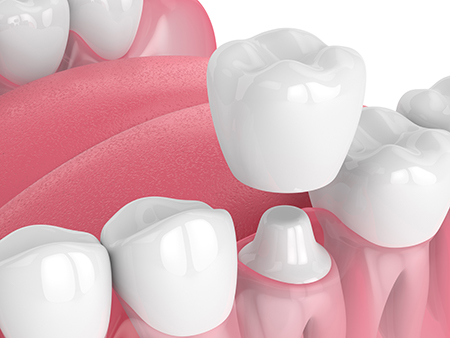
A ceramic crown is a custom-made cap that covers the visible portion of a prepared tooth, restoring its shape and function. Crowns are commonly used when a tooth is extensively decayed, fractured, or weakened after a large restoration. They act as a protective shell, taking the stresses of chewing and preventing further breakdown of the remaining natural tooth.
Crowns are also the preferred choice when a tooth has been treated with a root canal. After endodontic therapy the internal structure of the tooth is altered and may be more brittle; a crown helps contain the tooth and reduce the risk of root or crown fractures. Similarly, a crown is the right restoration for an abutment tooth that will support a bridge or for covering an implant to replace a missing tooth.
In addition to structural repair, crowns can address cosmetic concerns—masking discoloration, correcting minor shape issues, and harmonizing the look of an individual tooth within the arch. Modern all-ceramic crowns can accomplish these goals while preserving a natural appearance under different lighting conditions.

Advances in dental ceramics have closed the gap between strength and aesthetics. Materials such as lithium disilicate and high-translucency zirconia combine toughness with lifelike translucency and surface finish. Unlike traditional metal-based crowns, contemporary ceramic restorations can be metal-free from margin to occlusal surface, eliminating visible metal lines at the gumline and improving biocompatibility for many patients.
Ceramic crowns interact with light in ways that mimic natural enamel and dentin, so they deliver a convincing color and depth. Many ceramic systems can be fabricated with thinner profiles than older restorations, which allows us to preserve more of the underlying tooth during preparation while still providing the necessary strength.
Other practical benefits include excellent resistance to staining, a comfortable fit when properly designed, and gentle behavior with surrounding soft tissues. For patients with metal sensitivities or those who prefer a fully metal-free restoration, ceramics offer an attractive alternative without sacrificing longevity.
Choosing the right ceramic is a clinical decision based on the tooth’s position, the forces it will endure, and the cosmetic demands of the case. For front teeth where translucency and shade matching are paramount, glass-ceramics like lithium disilicate can provide excellent optical properties. For posterior teeth that require maximum strength, monolithic zirconia or layered zirconia systems are often the preferred choice.
Each material has trade-offs: some ceramics offer superior esthetics but need more careful handling under strong bite forces, while others prioritize durability with slightly different optical qualities. Our team evaluates occlusion, opposing dentition, and the condition of the prepared tooth to recommend the material that best balances reliability and appearance for your unique bite.
When appropriate, we also consider design strategies—such as full-contour versus layered restorations—that enhance performance without compromising look. Communication between clinician, patient, and the dental laboratory is essential so the final crown matches shade, shape, and function expectations.
A successful crown begins with careful diagnosis and planning. We use a combination of visual assessment, digital imaging, and bite analysis to determine the correct shape and position for the restoration. Conservative tooth preparation techniques are prioritized to preserve as much healthy structure as possible while creating a stable foundation for the crown.
Many offices now use digital impressions and CAD/CAM workflows to design and mill crowns with high precision. Whether fabricated in a local laboratory or designed and milled in-office, the process includes meticulous shade selection and adjustment to ensure a natural match with neighboring teeth. When a temporary crown is needed, it protects the prepared tooth while the final restoration is being completed.
At placement, we check fit, marginal integrity, and occlusion carefully. Proper cementation and finishing ensure a tight seal and a comfortable bite. We also review home care and maintenance to help prolong the life of the crown—regular brushing, flossing, and routine dental visits are important for monitoring the restoration and surrounding tissues.

Patients rely on our practice because we combine clinical experience with a focus on comfort and clear communication. We take the time to explain why a crown is recommended, what to expect during treatment, and how different material choices influence appearance and strength. That transparency helps patients make confident decisions about their care.
Our clinicians emphasize precision—accurate preparation, careful impressions or digital scans, and thoughtful laboratory collaboration all contribute to restorations that fit well and look natural. We strive to minimize unnecessary tooth removal and select materials that support long-term success in your mouth.
Whether the goal is to repair a fractured back tooth, protect a root‑canal‑treated tooth, or improve the look of a front tooth, our team approaches each case with the same attention to detail and patient-centered care. If you have questions about ceramic crowns or would like to explore restorative options, please contact our office for more information.
While a dental filling is designed to replace a portion of a decayed or damaged tooth, a dental crown offers full coverage to restore the tooth’s entire outer surface. A well-fitting dental crown not only protects and strengthens the underlying tooth structure, but it also restores the tooth’s appearance and function.
The procedure for getting an all-ceramic crown is much like the procedure for getting any other type of crown. In all cases, the tooth needs to be prepared, an impression taken, and a permanent crown cemented into place. A single all-ceramic crown can typically be fabricated over the course of two visits. However, with CAD/CAM technology, a same-day crown can be fabricated from start to finish in a single visit. With the first approach, a temporary crown is typically worn until the second visit, when the permanent restoration is placed. As with every treatment plan, our office will explain your best options in care.
As the name implies, a temporary crown is only worn for a short time until the permanent crown is placed. A temporary crown is typically fabricated from durable tooth-colored dental acrylics. While designed to protect the underlying tooth between appointments, and until your new permanent crown gets placed, a temporary crown is also fabricated to look like a natural tooth and maintain the look of your smile.
While you should feel better having an attractive and functional tooth to restore your smile, your tooth may feel a little sensitive following treatment. This initial sensitivity will subside. We take great care to make sure your new restoration looks great, fits well, and your bite is perfect. However, we’re always happy to make any minor adjustments to ensure your comfort.
With some exceptions, teeth with root canal procedures are typically restored and protected from further damage with a full-coverage crown. Based on what’s best for your smile, our office will recommend the most appropriate restoration to maintain the health and longevity of your tooth following a root canal procedure.
A dental crown is a long-term restoration that, if properly cared for, can serve you well for many years to come. Once your new crown is placed, it requires the same brushing, flossing, and periodic checkups as your natural teeth. Avoid biting your fingernails and chewing on hard or sticky objects such as ice, pencils, or taffy, which can damage or loosen your crown. Remember, clenching and grinding your teeth puts excessive pressure on both natural teeth and dental restorations. Unless treated, this habit can compromise the longevity and integrity of your dental work, including crowns.
Although your new all-ceramic crown restores the tooth's strength, form, and function, you can still develop dental disease in the absence of proper care. To prevent gum disease and tooth decay, it’s essential to brush and floss as instructed and see our office for routine checkups, cleanings, and care.
How long a dental crown lasts depends on various factors, including your level of oral care, diet, and oral habits. While the standard answer is that dental crowns can last anywhere from 5 to 15 years, existing literature confirms that most dental crowns remain in place at 15 to 20 years.
At the office of Apple Dentistry, we strive to provide the highest quality of care to address all your dental needs. Once we’ve had the opportunity to examine your smile, we can give you a clear picture of any dental issues that are present, along with a quote for how much treatment will be. The cost of dental crowns can vary a little, depending on the type of crown and its location. Our goals are to provide the highest quality of care and help patients begin treatment without additional financial stress or delay. We’re always happy to answer all your questions on dental insurance coverage, available financing, and payment plans.
Coverage for all-ceramic crowns depends on your dental insurance plan. Today, many dental plans provide some level of coverage for all-ceramic crowns. At the office of Apple Dentistry, we work with patients to optimize their dental benefits and get the care they need to maintain healthy and beautiful smiles!
A ceramic crown is a custom-made cap that fits over the visible portion of a prepared tooth to restore its shape, strength and function. It is fabricated from advanced dental ceramics engineered to mimic the optical properties of natural enamel and dentin. Crowns are designed to protect weakened tooth structure, distribute chewing forces, and restore a tooth’s anatomy for proper bite and esthetics. Because they are made to exacting specifications, ceramic crowns also help maintain the stability of adjacent teeth and supporting tissues.
Ceramic crowns can be used on teeth that are extensively decayed, fractured, or structurally compromised after a large restoration. They are also an appropriate restoration for teeth that will serve as abutments for bridges or that cover dental implants. In many cases contemporary ceramic materials produce a very natural appearance while avoiding metal beneath the restoration. The result is a durable, lifelike restoration that blends with the surrounding dentition.
Ceramic crowns act as a protective shell that encases the prepared tooth, redistributing occlusal forces and reducing stress on the remaining natural structure. By covering fragile or heavily restored enamel, a crown prevents further fracture and limits the risk of additional decay at vulnerable margins. Crowns restore proper form and contact relationships so the restored tooth functions with the rest of the arch during chewing and speaking. When designed and fitted correctly, crowns also promote healthier soft tissues around the margin.
Crowns are commonly recommended after root canal therapy because endodontically treated teeth can become more brittle and prone to fracture. They are also used to restore teeth that will support a bridge or to cap dental implants where precise contour and occlusion are essential. In addition to structural benefits, ceramic crowns can address cosmetic concerns such as discoloration, minor shape discrepancies, or size mismatches to harmonize the smile. This combination of protection and esthetics makes crowns a versatile restorative option.
Dental ceramics encompass a range of materials, each with distinct mechanical and optical properties. Common choices include glass-ceramics such as lithium disilicate, prized for excellent translucency and shade matching, and high-translucency or monolithic zirconia, which offer superior strength for areas with high occlusal load. There are also layered ceramic systems that combine a strong substructure with an esthetic veneering ceramic to enhance depth and surface characterization. Each class of material is engineered to balance toughness, wear resistance, and lifelike appearance.
The selection among these materials depends on clinical needs: glass-ceramics tend to deliver the most enamel-like translucency, while zirconia provides resilience where biting forces are greatest. Modern ceramics are also highly resistant to staining and interact with light similarly to natural tooth tissue, which helps achieve convincing color and depth. Understanding these material differences allows clinicians to match the restorative material to each tooth’s functional and cosmetic demands.
Choosing the ideal ceramic is a clinical decision that considers tooth position, opposing dentition, occlusal forces and aesthetic goals. For anterior teeth where translucency and subtle shading are critical, clinicians often favor glass-ceramics that can reproduce fine optical effects. For posterior teeth that endure strong chewing forces, a higher-strength ceramic such as monolithic zirconia may be more appropriate to reduce the risk of fracturing. The condition of the prepared tooth, remaining enamel, and anticipated load all factor into the recommendation.
In addition to material selection, restorative design choices — such as full-contour versus layered crowns — influence performance and appearance. The dental team evaluates bite relationships, possible parafunctional habits, and the health of surrounding tissues before proposing a material. Clear communication with the dental laboratory and careful shade matching are essential to achieving a restoration that meets both functional and cosmetic expectations.
The process begins with a thorough diagnosis that includes visual examination, digital imaging and bite analysis to determine the tooth’s prognosis and the ideal restoration shape. Conservative tooth preparation is carried out to create a stable foundation while preserving healthy structure, and impressions or digital scans capture the prepared tooth and surrounding dentition. When required, a temporary crown protects the preparation while the final restoration is fabricated, maintaining function and esthetics during the interim. These planning steps ensure predictable fit, occlusion and tissue response once the permanent crown is placed.
At the fabrication stage, the restoration may be produced by a dental laboratory or with an in-office CAD/CAM system for precise fit and contour. At Apple Dentistry, digital workflows are often used to enhance accuracy in design, milling and shade communication with the laboratory. During the final appointment, the crown is tried in, adjusted for marginal integrity and occlusion, then permanently cemented or bonded using protocols appropriate to the chosen ceramic. Post-placement checks and home-care guidance help protect the restoration and surrounding tissues.
Home care for a ceramic crown follows the same basic principles as care for natural teeth: brush twice daily with a soft-bristled toothbrush and a nonabrasive fluoride toothpaste, and clean between teeth daily with floss or interdental cleaners. Maintaining meticulous oral hygiene prevents plaque accumulation at the crown margins and reduces the risk of decay on adjacent teeth. It is also important to avoid using the crown to open packages or bite very hard objects, as sudden heavy forces can chip or crack ceramic restorations.
For patients with grinding or clenching habits, a professionally fabricated nightguard can protect crowns from excessive wear and reduce the chance of damage. Regular dental checkups allow the clinician to monitor the crown’s margins, contacts and opposing wear, and to detect any early issues that may need adjustment. Prompt attention to sensitivity, looseness or chipping helps preserve the restoration and the health of the surrounding teeth.
The lifespan of a ceramic crown depends on material selection, the way it was designed and placed, oral hygiene, and individual habits such as grinding or biting hard foods. With careful preparation, precise fit, and good oral care, ceramic crowns often provide many years of reliable service. Materials like high-strength zirconia can offer enhanced durability in high-load areas, while glass-ceramics deliver superior esthetics and long-term color stability when maintained properly. Regular professional evaluations help detect and address wear or marginal changes before they progress.
Factors that can shorten a crown’s life include recurrent decay at the margin, excessive occlusal forces, and trauma to the restoration. If a crown becomes loose, fractured or if you notice persistent sensitivity, it is important to see the dental team promptly to assess repair or replacement options. Routine dental visits also allow for polishing, occlusal adjustment and minor repairs that can extend the serviceability of the restoration.
Yes, ceramic crowns are commonly recommended after root canal therapy because endodontically treated teeth can be more brittle and susceptible to fracture. A crown helps encapsulate and reinforce the remaining tooth structure, reducing the risk of cracks or breaks that could compromise the tooth’s long-term function. Proper ferrule — a band of healthy tooth structure above the gumline — and, when necessary, a post-and-core build-up are considered to create a stable foundation for the crown. Together these measures support chewing forces and protect the restored tooth.
The specific restorative approach depends on how much natural tooth remains, the canal anatomy and the functional demands on the tooth. In many cases contemporary ceramic materials provide both the strength and esthetics needed to restore a root-canal-treated tooth. The clinician will evaluate the individual situation and recommend the restoration type and design that best preserves function and reduces the risk of future complications.
Modern ceramic systems offer excellent shade-matching capabilities and can reproduce the color, translucency and surface texture of natural teeth when properly specified. Shade selection involves visual assessment with shade guides, digital photography under standardized lighting and clear communication of characterizations to the dental laboratory or milling technician. Layered ceramics and advanced staining techniques allow technicians to recreate subtle internal shading and surface nuances, producing a lifelike result that integrates with adjacent teeth.
Shape and contour are planned through diagnostic tools such as wax-ups, digital mock-ups or provisional restorations that help preview the final outcome. During try-in, the clinician checks proportions, contacts and occlusion, and makes any necessary adjustments to ensure the crown looks and functions harmoniously. This collaborative process between patient, clinician and technician is essential for achieving a natural, durable restoration.
Our practice emphasizes conservative preparation, careful material selection and precise laboratory communication to deliver ceramic crowns that are both durable and natural in appearance. The clinical team focuses on diagnostic planning, modern digital workflows and attention to occlusion to ensure restorations fit well and perform reliably. We prioritize patient education and clear explanations so you understand the reasons for recommending a crown and the steps involved in achieving the best long-term outcome.
During treatment you can expect thorough shade matching, a focus on preserving healthy tooth structure, and meticulous fit verification at placement to minimize future complications. Follow-up care and routine maintenance are part of the restorative plan to help protect your investment in dental health. If you have questions about ceramic crowns or would like to discuss restorative options, contact our office to schedule a consultation.